Why do pianos go out of tune?
Pianos go out of tune primarily due to fluctuations in temperature and humidity. These changes cause
expansion or contraction of the various component parts of the piano will alter the overall pitch. Rates of change vary
in different parts of the scale such that the overall pitch level and the consonance between sections will be altered, i.e.
the piano goes "out of tune". As a consequence, pianos go out of tune whether or not they are played
and should be serviced regularly in spite of the level of usage.
How often should I tune my piano?
Typcally, pianos are
tuned twice a year. How often a piano needs tuning will depend mostly on the stability of the environment in
which the piano is kept and the critical demands of the player. In an unstable environment consider having a Dampp-Chaser
(humidity control) system installed. The expense is not too great and the tuning will be more stable as a result.
What is regulation?
Piano actions need periodic
adjustment of the moving parts to compensate for wear, the compacting of felt and cloth, and changes due to fluctuations in
humidity. This process is called regulation. Each note in the piano requires several specific adjustments to
insure proper and uniform response.
What is voicing?
Voicing, also referred to as tone regulating, primarily involves making changes to the tone of the
piano by addressing both the static and dynamic hardness of the hammer felt. Goals of voicing are dynamic range and
level, timbre (partial development), evenness, and balance. Customer's personal preferences ultimately dictate tonal
levels.
Other factors may also contribute to the tonal character
or lack of tonal clarity or evenness such as the general shape of the hammer (from wear), hammer to string mating, string
seating, regulation, soundboard and bridge health and response. Assessing where the problem lies and addressing those
specific issues is part the process.
Manipulation of hammer hardness
is done with the use of needles, shaping, through the use of chemical hardeners and a number of other techniques depending
on the type and responsiveness of the hammer.
Voicing is a highly
technical procedure requiring experience and expertise and is as important as tuning in bringing out the potential of the
instrument and in giving tonal control to the player.
So is having my piano
just tuned at each service be enough?
That depends on what you want from the instrument. By
spending a bit more time at each service appointment addressing those items that need the most attention, like regulation
and voicing, you can keep the piano performing at a consistently high level.
What is rebuilding?
Rebuilding encompasses a variety of procedures during
which the piano is restored to its "like new" condition. The term "rebuilding" is not rigidly defined
and many pianos that are termed "rebuilt" may vary considerably in the scope of the work performed. When considering
a rebuilding job it may be useful to think of the piano in terms of three main areas:
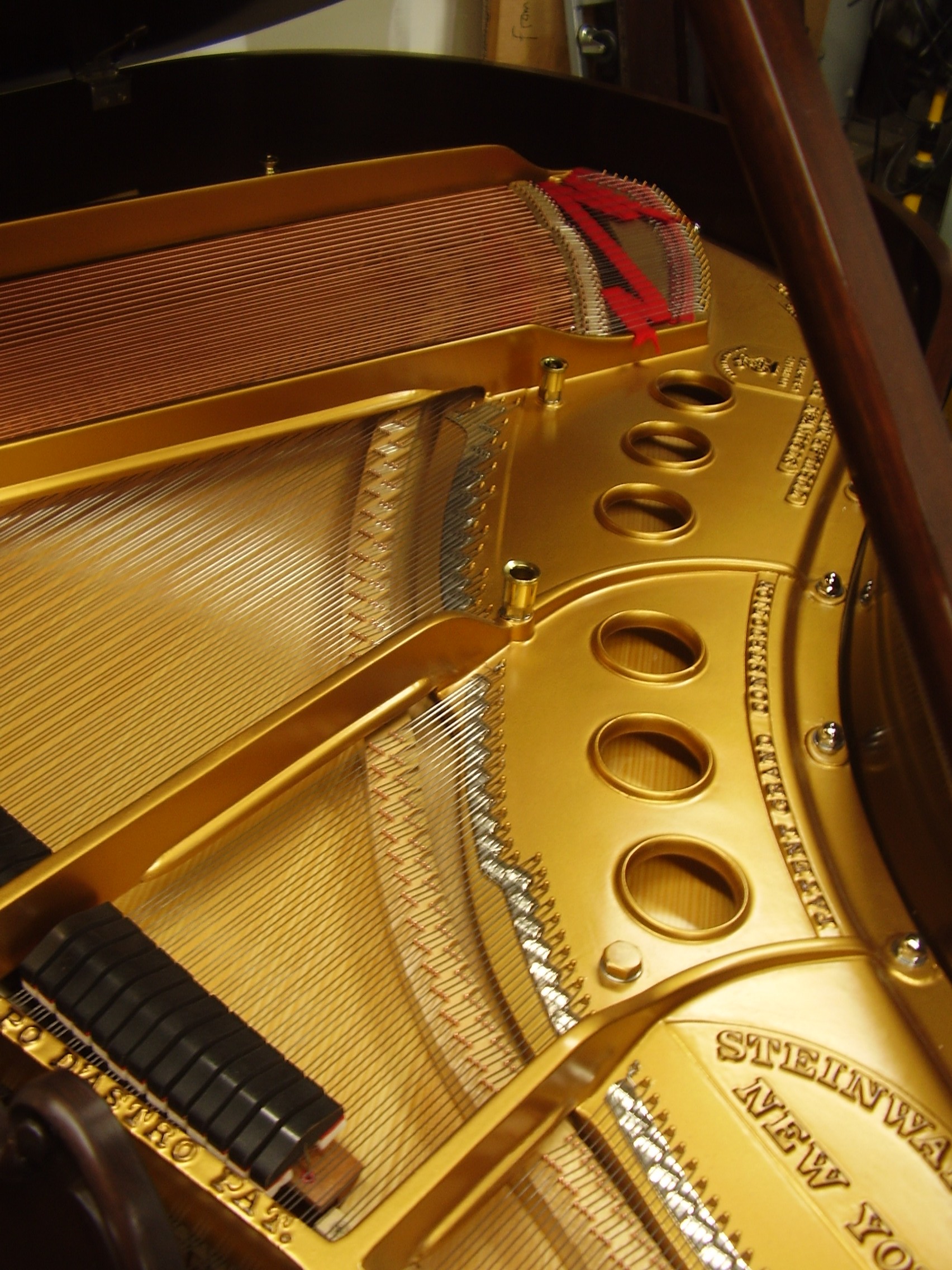
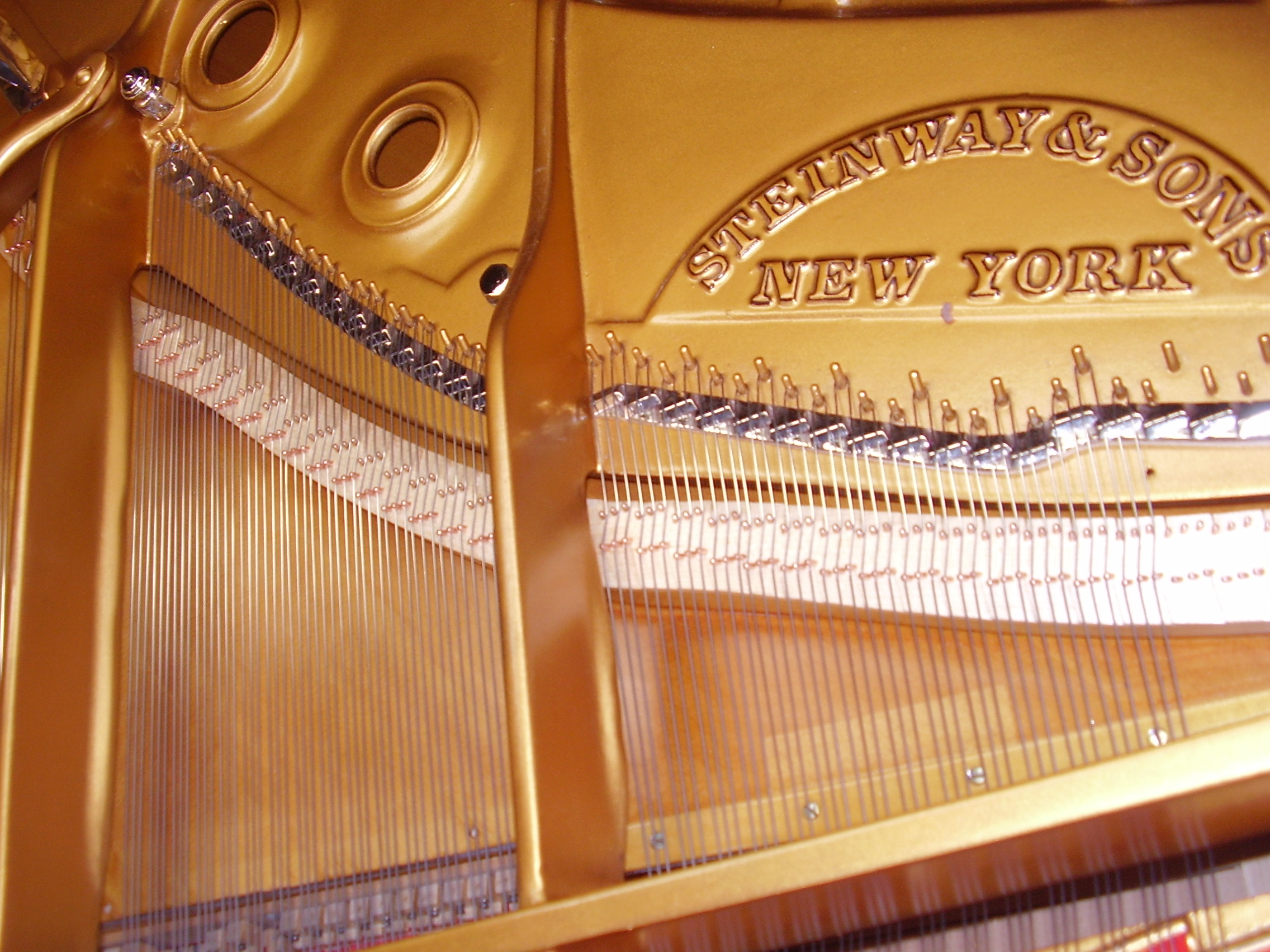
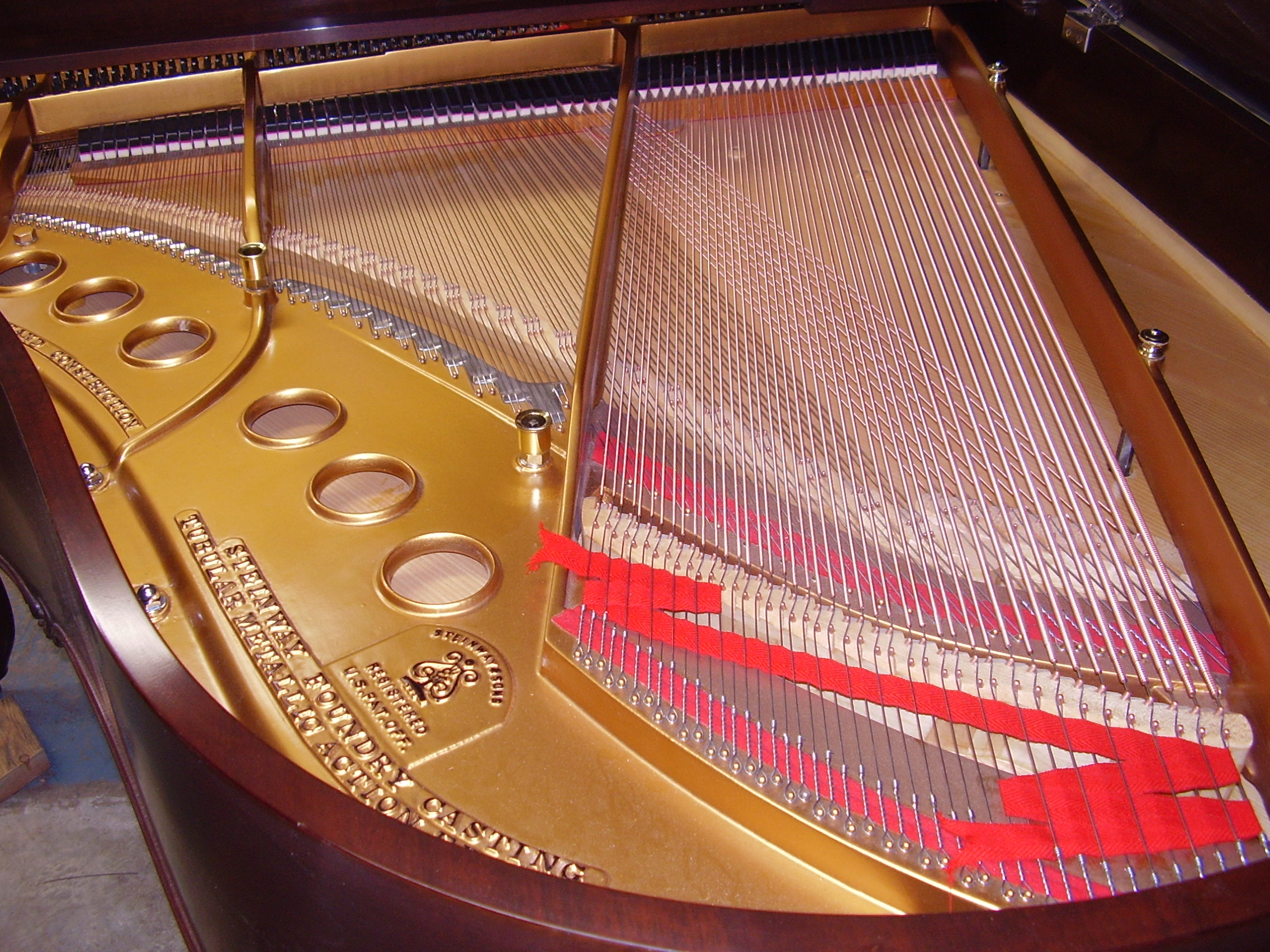
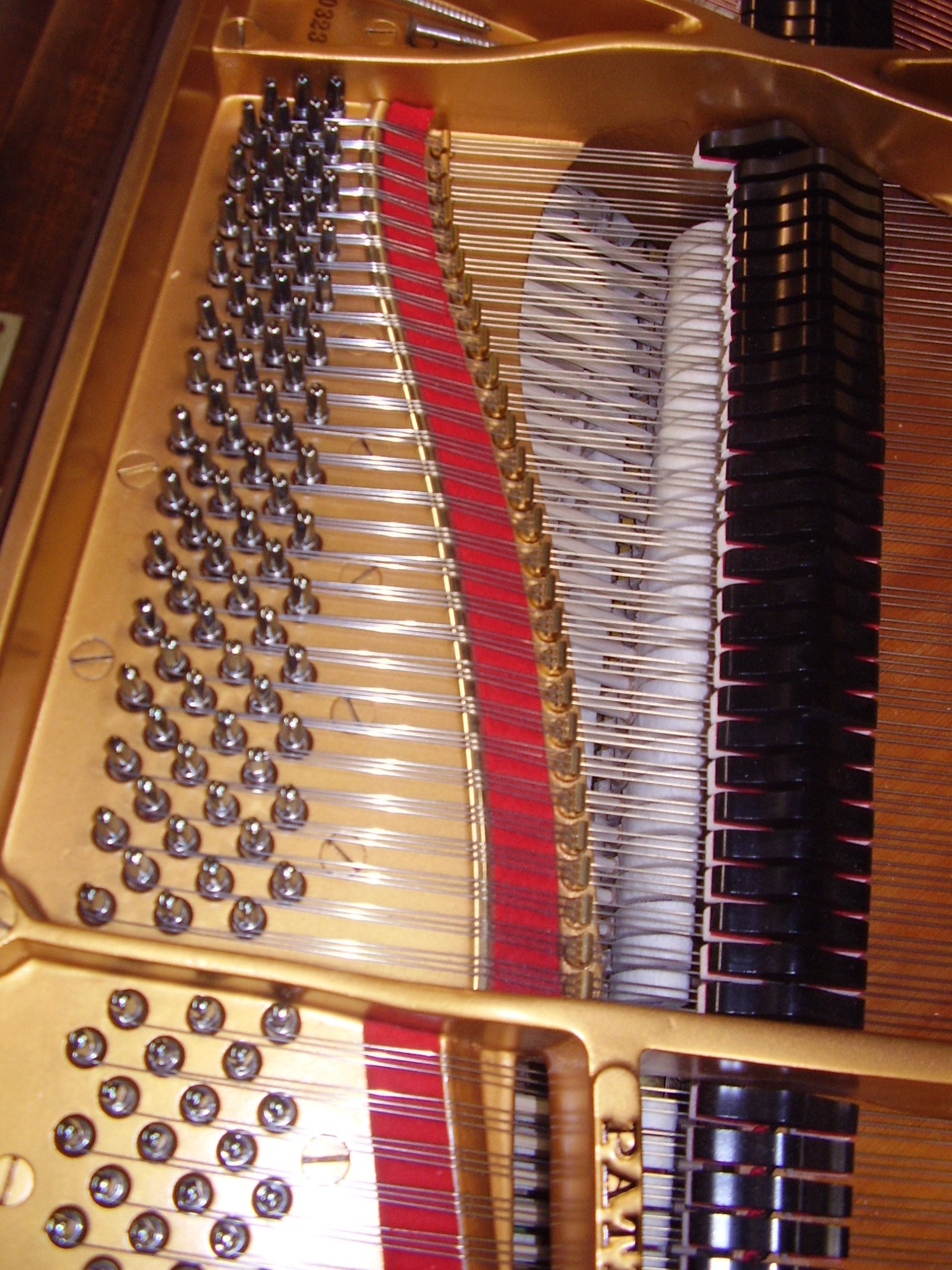
The bellyof the piano, which includes the strings, soundboard, bridges, pinblock, rim,
and structural bracing: (see below "When should the soundboard be replaced").
The actionof the piano, which includes hammers, shanks, wippens, keys, dampers system,
pedals and trapwork. (see also below "My action is too heavy, what can I do about it")
The case, which refers to the cosmetic appearance of the
piano.
See the following page "Piano Rebuilding and Restoration"
for a list of items typically addressed in a complete restoration job. Rebuilding procedures must be assessed for each
individual piano as the needs of each piano may vary.
My action is too heavy.
Why and what can I do about it?
The piano action consists of a system of three
levers which combine to create the total action leverage. In simple terms, the action leverage determines how efficiently weight
(in this case the hammer and related parts) can be lifted. Because a small change in the weight of the hammer makes a
larger change in the touchweight (how much force is required to depress the key), the weight of the hammers must be balanced
against the total system leverage. Only when the action leverage is coordinated with the hammer weight will you get an
action that is properly responsive. Actions do offer some flexibility between heavier and lighter and all action jobs can
be customized to the player's personal taste. Other considerations such as inertia, smooth touchweighting, component balancing
and matching, are all part of our standard procedure when rebuilding actions
I've
heard that the soundboard is the soul of the instrument and that it should never be replaced. How do I know whether
or not to replace the soundboard?
Briefly, once the soundboard has deteriorated
and stops functioning as it was designed to (assuming it functioned correctly to begin with), it bears little resemblance
to the board in its original condition and replacement should be considered. A properly functioning soundboard will
be designed in conjunction with the string tensions in a particular piano and will aim to balance attack, development and
sustain--qualities which are the component parts of piano tone. Failure or weakness is usually characterized by distortion,
buzzing, strong attack and short sustain. Not all soundboards will need to be replaced. Age, original design and
construction and environment all play a role in soundboard performance and longevity.
David Love Pianos
415 407 8320